 Pin
Pin The first time I bit into a sabich at a tiny Tel Aviv stand, I understood immediately why this sandwich had devoted followers. The vendor's hands moved with practiced speed—eggplant hitting hot oil, tahini sauce ribboning across warm pita, eggs already waiting—and within moments I held something that felt both humble and luxurious. It was late afternoon, that golden hour when street food tastes best, and I was hooked by how the creamy tahini sang against the crispy, almost meaty eggplant. That meal changed how I thought about vegetarian cooking.
I made this for my roommate on a weeknight when we were both too tired to decide on dinner, and something shifted. She watched me layer those warm pita pockets with such focus that I realized I was doing more than cooking—I was telling a story about flavors that belong together. By the time we sat down, sabich had become our thing, the meal we'd text about when life got messy.
Ingredients
- Eggplant: Medium rounds, sliced thin enough to fry quickly but thick enough to hold their shape; salting them first pulls out bitter water and helps them crisp beautifully.
- All-purpose flour: Just a light coating—too much and it becomes heavy, defeating the whole point of that golden-fried texture.
- Vegetable oil: You need enough to create that luxurious fry; don't skimp or your eggplant absorbs oil instead of crisping.
- Eggs: Hard-boiled and sliced, they add protein and a buttery richness that anchors everything else.
- Fresh tomatoes and cucumber: Dice small so they stay bright and don't make the pita soggy; the salad is your freshness counter to all that fried richness.
- Red onion: A quarter of one, finely chopped, gives you that sharp bite that wakes up your palate.
- Fresh parsley: Chopped and scattered, it adds herbaceous green notes that make the whole thing feel alive.
- Tahini paste: The soul of the sauce; find a good quality one because you taste it directly, and thin it with water until it's ribbony, not glue.
- Lemon juice: Essential in both the salad and sauce; it's your acid, your brightness, your balance.
- Pita bread: Large and warm; cold pita is a tragedy here.
- Amba: That pickled mango sauce is optional in the recipe but essential in spirit—it's what makes this taste authentically Middle Eastern, with that funky-fruity complexity that lingers.
Tired of Takeout? 🥡
Get 10 meals you can make faster than delivery arrives. Seriously.
One email. No spam. Unsubscribe anytime.
Instructions
- Salt the eggplant:
- Lay your slices on a cutting board, sprinkle salt generously, and wait 15 minutes while they weep. This isn't just technique—it removes bitterness and guarantees crispness when they hit the hot oil. Pat them dry with paper towels afterward, or they'll steam instead of fry.
- Flour and fry:
- Coat each slice lightly in flour—think snow dusting, not breading—then slide them into oil that's hot enough to sizzle immediately. Watch for golden brown on each side, about 2 to 3 minutes, then lift them onto paper towels to drain. The kitchen will smell like something between a Mediterranean kitchen and a fair, irresistible either way.
- Boil eggs simultaneously:
- While the eggplant fries, start your eggs in a saucepan of cold water. Bring to a boil, then reduce heat and simmer for exactly 9 minutes—no more, no less, or you'll get that gray-green ring that tastes like disappointment. An ice bath stops the cooking instantly and makes peeling easier.
- Build the Israeli salad:
- Dice your tomatoes and cucumber small, mince the red onion, tear parsley leaves, and toss everything together with lemon juice, olive oil, salt, and pepper. This should taste bright and alive on its own, not a supporting player. Taste as you go because your tomatoes might need more or less lemon depending on their sweetness.
- Make tahini sauce:
- Whisk tahini with water gradually—start with a few tablespoons and keep whisking as it loosens, or you'll end up with a clumpy mess. Once it's creamy, add lemon juice and minced garlic and salt to taste. It should be thick enough to drizzle but thin enough to flow.
- Warm the pita:
- This matters more than you'd think. A warm pita is pliable and embracing; cold pita cracks and frustrates. Wrap them in foil and warm in a low oven or briefly char them over a flame if you have one.
- Assemble with intention:
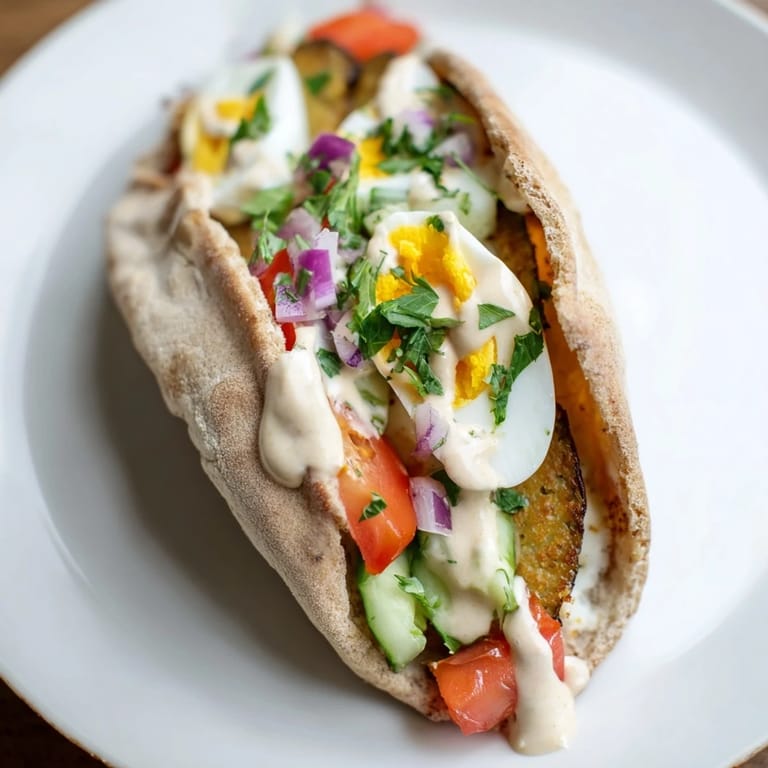
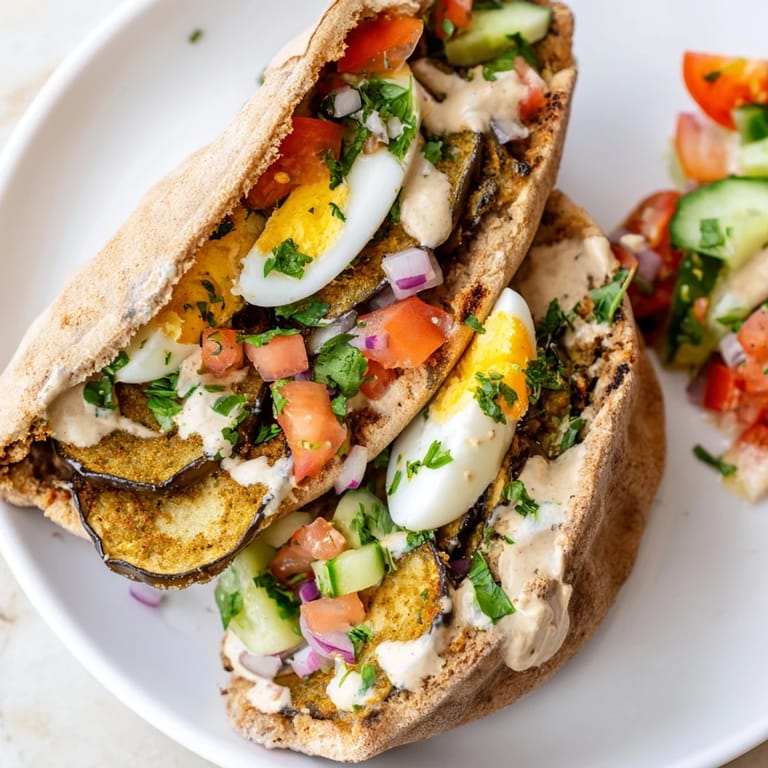
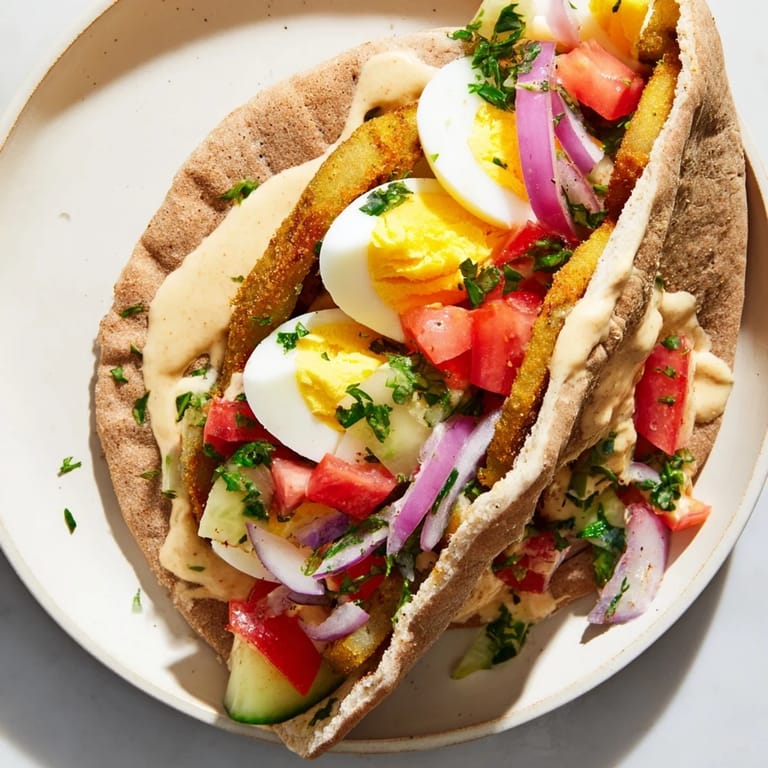
- Slice each pita to create a pocket. Layer eggplant first—it's the star—then sliced eggs, then salad so it stays somewhat compact. Drizzle tahini generously, add amba if you're using it, pickles, hot sauce, cilantro. The order matters less than making sure every bite has something from each component.
- Serve immediately:
- Eat while everything's still warm and the pita can hug all those flavors without falling apart.
 Pin
Pin There's something almost ceremonial about making sabich for people you care about. My sister came home exhausted from a long shift, and I handed her a warm pita that felt like a quiet apology for not being around more. She ate standing up at the kitchen counter, and when she finished, she looked at me and said, 'This is better than sleep.' I knew then that good food isn't about impressing; it's about meeting someone exactly where they are.
Why Fried Eggplant Changes Everything
Eggplant has a reputation for being forgettable, but frying transforms it into something almost meaty, with a crust that shatters when you bite it and a creamy interior that's nothing like boiled or roasted. The key is getting your oil hot enough that the exterior browns in minutes rather than absorbing oil slowly. I learned this the hard way, standing over a skillet watching sad, pale eggplant slices that wouldn't crisp. Once the oil is right—and you'll know by the aggressive sizzle when the eggplant hits it—everything changes.
The Magic of Tahini as Glue
Tahini does more than add richness; it's the structural element that holds everything together and prevents the pita from falling apart. When you drizzle it across the eggplant and eggs, it creates a creamy matrix that lets all the textures coexist—crispy, tender, bright, tangy—without one overwhelming the others. I think of it as a flavor translator, making sure your crispy eggplant and fresh salad speak the same language.
Making It Your Own
The beauty of sabich is that it's a framework, not a rulebook. I've made it with roasted eggplant on nights when I didn't want hot oil splattering, topped it with labneh for extra creaminess, and once, out of desperation, substituted cauliflower and nobody complained. The constants are warm pita, tahini sauce, and something crispy and substantial at the core, but everything else is negotiable.
- If amba feels too adventurous, use a squeeze of harissa mixed with olive oil for heat and depth instead.
- Vegan sabich skips the eggs but gains weight with extra tahini sauce or a spread of hummus for richness.
- Batch-fry your eggplant ahead and reheat in the oven so you're only assembling at the last moment.
 Pin
Pin Sabich is the kind of meal that tastes like care without requiring fancy ingredients or pristine technique. It's honest food that asks you to pay attention to small things—salt timing, oil temperature, the balance between creamy and bright—and rewards that attention with something genuinely delicious.
Recipe Q&A
- → How do I get the eggplant crispy without it being oily?
Sprinkle salt on sliced eggplant and let it sit to draw out moisture before lightly dredging in flour and frying. Drain excess oil on paper towels right after frying.
- → Can I prepare the tahini sauce ahead of time?
Yes, tahini sauce can be whisked together ahead and stored in the fridge for a day. Stir before serving to restore smooth texture.
- → What variations work well with the Israeli salad?
Adding fresh herbs like mint or replacing cucumber with summer squash are great ways to tweak the salad while keeping its bright and fresh character.
- → How do I make this dish vegan?
Simply omit the hard-boiled eggs or substitute them with firm tofu slices to maintain protein and texture.
- → Is it better to use fresh pita or store-bought?
Freshly warmed pita offers softness and warmth that complements the fillings, but good quality store-bought pita works well if heated properly.
- → What is the role of amba in this dish?
Amba, a pickled mango sauce, adds a tangy, slightly spicy contrast enhancing the overall flavor profile though it is optional.